Kicking off
Taking an manufacturing approach, silica powder and filtration support represent the critical factor in various systems across each all-encompassing range of fields. Data confirms that reliable performance is based on acknowledging the unique qualities of the element – its grain dimension, porosity, and filtration speed. Refining these parameters is decisive to securing desired cleanliness and performance in the filtration process. In addition, controlling dust concentration is a important point for worker safety and environmental standards.
Choosing Best Diatomite Supplier
Selecting a reliable diatomite supplier for your filtration processes can significantly modify product integrity and operational results. Assess characteristics including item purity, granule dimension, supply, rates, and buyer support while deciding. Eschew omitting technical proficiency and freight possibilities – a top supplier confers beyond common materials. In summary, creating a firm association with a competent diatomite filtration group will enhance your prolonged triumph.
Varied Employments of Siliceous Earth Outside Filtration
Albeit mostly recognized for filtering contributions, this siliceous material possesses extraordinarily broad supplementary applications. Outside the water sector, this organic substance aids horticulture by functioning as an effective pest control and ground enhancer. Furthermore, its unique porous structure makes it valuable in animal feed, helping with digestive health. Consumers observe this compound in personal care items acting as a gentle abrasive or desiccant enhancer. Basically, the diversity of this earth amazes knowledgeable experts.
- Gardening
- Livestock Nutrition
- Toiletries
Inspecting Compliance in Filtration Material Production
Delivering unvarying quality in diatomite clarifying material production demands exacting control practices. These inspections commence with the unprocessed compound, encompassing analysis of particle spread, openness, and wetness degree. During pulverizing and calcination tasks, sustained monitoring of whiteness, apparent density, and fluidity is pivotal. Finished product batches undergo extensive testing according to established protocols, often incorporating particle size measurement using laser diffraction and surface area determination.
- Substantiation of freedom from contaminants is an important factor
- Frequent evaluations of apparatus occur
- Accountability of components is secured
Universal Diatomaceous Earth Trade: Patterns and Vendors
The international diatomaceous market currently experiences major growth prompted by rising demand among multiple domains. Prominent drivers cover elevated employment in separation procedures, farming pest reduction, and as moisture-removing materials. Several major manufacturers are actively investing in research & development to enhance product quality and expand their market. Key firms including EP Minerals, Imerys, Grant Prideaux hold an important function influencing the trajectory of diatomite industry.
Choosing Diatomite Screening Aid: Vital Considerations
While selecting kieselguhr clarification medium for your task, significant features should be reviewed. The particulate dimension range is vital, directly modifying filtering velocity and quality of the purified liquid. Evaluate the separation machinery's force capability; rougher kinds favor minimal strains, while delicate selections endure greater loads. Likewise, the celite's purity and thickness alter operational properties. Finally, review cost and availability of diverse grades to enhance separation outcomes.
- Granule Size Diversity
- Screening Equipment Force Threshold
- Quality and Loose Thickness
- Price and Availability
Sustainable Sourcing of Diatomaceous Earth
Assuring enduring viability of siliceous material extraction beer filtration aid requires a firm vow to eco-conscious acquisition techniques. Formerly, diatomaceous earth mining created ecological issues including biodiversity imbalance and liquid exhaustion. Therefore, forward-thinking suppliers are now implementing practices that minimize these impacts. These practices involve restoring excavated terrain, protecting resources, and aiding regional populations. Additionally, sustainable sourcing can entail accreditations from autonomous entities, evidencing observance of harsh environmental mandates.- Emphasis on area restoration
- Limiting water expenditure
- Encouraging local progress
Celite Filtering Material: Enhancing Purifying Performance
Celite powder functions as a clarifying agent, notably boosting purification performance across broad commercial processes. This finely ground diatomite creates a porous layer on filter cloth, allowing for the removal of fines from liquids. Thus, clearness rises and the overall filtering becomes more effective.Understanding Diatomite and Its Manufacturing Process
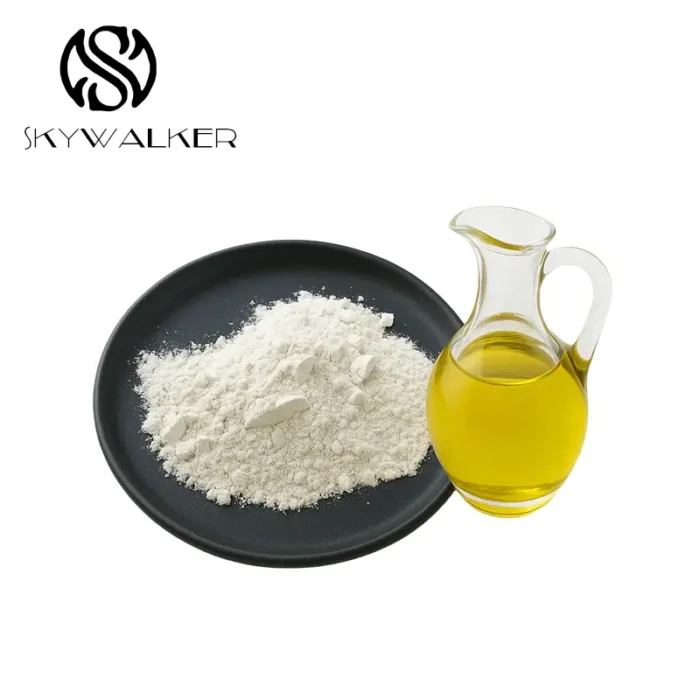
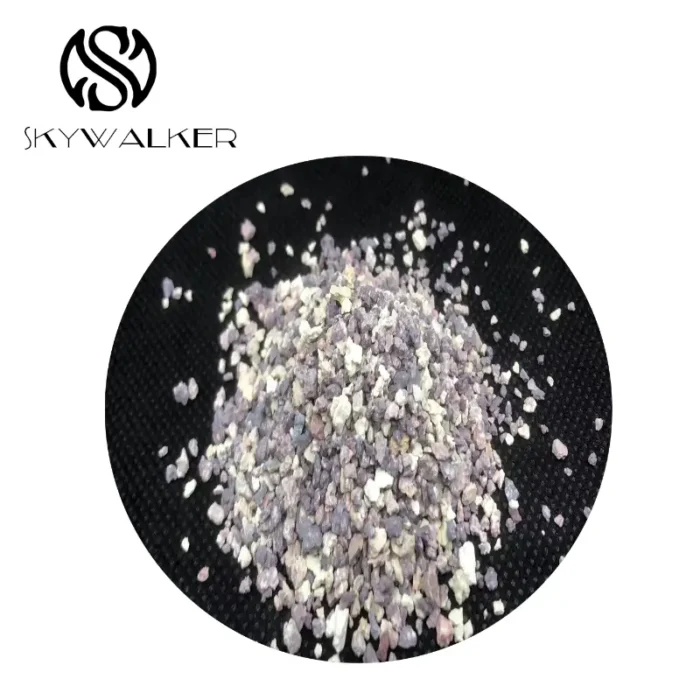
Diatomaceous powder, also referred to as earth substance, is sedimentary matter derived from microscopic algae remains. Its unique structure provides exceptional absorbent qualities|Its distinctive composition delivers remarkable filtering properties|Its specialized makeup grants outstanding abrasive features|Its characteristic formation offers extraordinary absorbency traits|Its individual configuration yields superior filtering abilities|Its peculiar composition presents exceptional abrasive qualities|Its exclusive structure affords outstanding absorbent features|Its special makeup supplies remarkable filtering properties}. The manufacturing of diatomite begins with mining from open-pit mines|The production of siliceous earth starts with extraction from surface quarries|The processing of diatomaceous material initiates with excavation from open deposits|The fabrication of silica sediment originates with mining at surface pits|The creation of diatomite commences with quarrying from open-pit sites|The synthesis of siliceous material starts with surface mining|The making of diatomaceous earth begins with excavation of open deposits|The formation of silica earth starts with quarrying surface mines}. The raw material is then crushed and washed to remove impurities|The unprocessed substance is subsequently broken and cleaned to eliminate contaminants|The crude product undergoes grinding and rinsing to discard debris|The natural material is pulverized and cleaned to reject impurities|The unrefined matter is crushed and washed to clear contaminants|The original compound is ground and cleansed to eradicate debris|The raw component is broken down and rinsed to remove impurities|The crude sample is pulverized and cleaned to eliminate contaminants}. Following washing, material undergoes drying to reduce moisture content|After cleaning, substance experiences evaporation to lessen dampness level|Post rinsing, product endures heat treatment to decrease water amount|Following cleansing, compound passes drying phase to cut down moisture presence|After washing, material goes through evaporation process to lower dampness content|Post cleaning, matter undergoes heating phase to reduce water level|Following rinsing, product experiences drying step to minimize moisture amount|After purification, substance passes heat treatment to decrease water presence}. Finally, it is milled into various sizes to meet application needs|Ultimately, it is ground into different grades to satisfy diverse demands|Concluding, it is pulverized into specific ranges to fulfill usage requirements|Eventually, it is milled into assorted distributions to accommodate different uses|In the end, it is ground into multiple sizes to adapt to application specifications|Finally, it is pulverized into varied grades to meet demand characteristics|Ultimately, it is milled into distinct ranges to fit use requirements|Eventually, it is ground into assorted distributions to conform with application needs}.