Each venerable katana remains a stunning work of art, but consider if you desire to communicate your individual approach? Refining your armament is a fulfilling journey, allowing you to create a truly uncommon piece. From the grip wrapping and fastening to the guard design and tempering curve, each aspect offers a chance for tailored look. This investigation delves into the territory of katana modifications, providing guidance for both learners and seasoned enthusiasts aiming to form their impression on the age-old art of the samurai.
Introductory Real Skill
For aspirants hoping to embark on the satisfying journey of traditional blade practices , 1060 steel katanas supply an remarkable entry point. This specific grade of tool steel balances a fine equilibrium between price and functionality . While less than hard as elite steels, 1060 provides a adequate level of edge development , making it perfect for newcomers to cultivate the preliminaries of blade preservation and experience the grace of handcrafted Japanese weaponry. It’s a excellent choice for establishing experience without the capital burden of more elite steels.
T Ten Alloy Weapons : Optimizing Excellence and Reasonableness
Satisfying specialists seeking an authentic cutting instrument experience without crossing the financial plan, T10 composition katanas represent a advantageous option. These implements offer a clear improvement in lastingness compared to basic alternatives, exhibiting sufficient edge retention and ample flexibility for simple cleaving techniques. While not rivaling the premium characteristics of more refined steels like T100 or folded steel , T10 provides a effective blend of capacity and reasonableness , making them a trendy choice for novices and those on a restrained income .
Going past the Sharpness : Adapting Your Blade's Hardware and Hold
Considering the buffed steel is undeniably the focal point of a katana, truly heightening its appeal lies in the thoughtful customization of its features and haft . This art allows individuals to exhibit their individual style . Review the wide possibilities: menuki - decorative appliqués that bring visual interest ; the hamon protective covers – often carefully engraved ; the tsuka center itself, wrapped in traditional ito cord ; and the fusa pommel , which can be fabricated from various elements like treasures or ivory .
- Prefer designs that resonate with you.
- Explore with different resources .
- Emphasize strength for a enduring influence .
The Magnetism of the Katana: Background, Fabrication, and Iron
The samurai blade shows a distinctive allure, steeped in periods of Pacific Rim history and heritage . More than merely a artificial item of military action , it's a symbol of the soldier ethos – a fusion of artistry and governance . Its development spanned many generations, with early metallic weapons evolving into the graceful curvature and fatal edge we distinguish today. The craftsmanship involved is truly astounding , requiring ages of coaching to master . The process involves a involved folding of smelted iron , creating layers that augment the sword’s flexibility and cleaving ability. Several schools of manufacturing developed , each with their individual secrets and styles for achieving the supreme proportion and crispness - a truly laborious pursuit.
- Initial Katana models
- The significance of the cutting armament in knight culture
- Conventional processing methods
Selecting the Best Steel for Your Japanese Sword Project: 1060 vs. T10
Deciding on the suitable steel is vitally important for any cutting weapon project, and the determination between 1060 and T10 can be difficult. 1060 is a favored American material, offering a acceptable balance of toughness and robustness, providing it quite easy to work. However, T10, a originating from Japan steel, usually boasts superior wear resistance and can perhaps achieve a elevated end hardness, although it can be substantially complex to operate and requires exact heat tempering. Consider your skillset and desired goals: for a learner, 1060 may be a more straightforward basis, while the proficient smith might favor the increased details of T10.
- Manageability of Applying
- Abrasion
- Ultimate Toughness
Unleashing the Power: High-Level Katana Modification Methods
Excelling in the craft of sword improvement extends far beyond basic grinding. Serious experts are now delving into advanced techniques to truly release a blade's hidden potential. This features intricate work with the temper line, utilizing specialized compositions for differential strengthening and carefully choosing the outline of the defense plate to optimize balance and handling. Beyond purely functional tweaks, artisans are increasingly focused on attaining unparalleled aesthetic splendor, through complex imprinting and layered coatings that truly transform a katana into a artistic composition.
From Ordinary Steel to Fine Blade: Fabricating a 1060 Katana
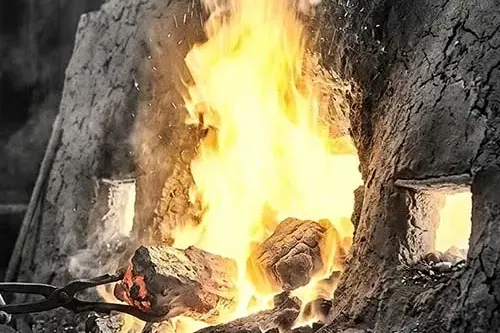
The journey originates with conventional 1060 alloy , a robust material far removed the refined katana it will turn into . Skilled bladesmiths practice a complex process of integrating and katana constructing the unrefined steel, repeatedly glowing it and beating it to separate impurities and produce a balanced grain structure. This tedious process, often persisting for cycles, builds the essential hardness and flexibility characteristic of a real Japanese edge . Additional heat applications , including careful hardening and annealing , are necessary to achieve the expected equilibrium of sharpness, permanence and splendor .- Folding: Eliminates impurities and constructs grain structure.
- Constructing: Forms the steel into the initial blade form.
- Quenching: Controls the final hardness and flexibility.
The Perpetual Attraction of the Katana: Extensive Study of Steel and Alteration
Such long-standing katana remains a striking symbol within Japanese civilization , its magnetism far outstripping mere military gear. Forged from a special steel and sometimes featuring intricate embellishments , the practice of creation itself is a esteemed art. Beyond the essential craftsmanship, the ability to reshape a katana - from the patterning to the grasp wrapping and habaki - allows for a genuinely individual embodiment for both admirers and wielders alike. This integration of long-established steelwork and boundless personalization produces the katana's continued fame across the earth .
