A time-honored samurai blade is a magnificent creation of artistry, but what if you seek to express your own style? Adjusting your gear is a profound journey, allowing you to assemble a truly unique piece. From the hold wrapping and fitting to the covering design and blade pattern, each detail offers a chance for individual flair. This inquiry delves into the realm of katana enhancements, providing perspectives for both apprentices and accomplished enthusiasts seeking to create their trace on the ancient art of the samurai.
Novice's Certified Craftsmanship
For people ready to embark on the advantageous journey of classical sword techniques , 1060 steel katanas bring an superb entry point. This distinct grade of basic steel reaches a perfect balance between expense and effectiveness . While lacking compared to hard as higher-end steels, 1060 permits a acceptable level of knife work , making it suited for initiates to learn the basics of weapon preservation and value the grace of genuine Japanese weaponry. It’s a superb choice for fostering experience without the economical burden of more premium steels.
T Gear Steel Edges : Balancing Quality and Price
Assisting practitioners seeking an authentic blade experience without shattering the finances , T10 metal katanas represent a attractive option. These blades offer a noticeable improvement in toughness compared to lower-grade alternatives, exhibiting decent edge retention and sufficient flexibility for rudimentary slashing techniques. While not rivaling the eminent characteristics of advanced steels like T100 or folded iron , T10 provides a worthwhile blend of ability and affordability , making them a popular choice for apprentices and those on a controlled revenue .
Surpassing the Edge : Customizing Your Weapon's Accessories and Hilt
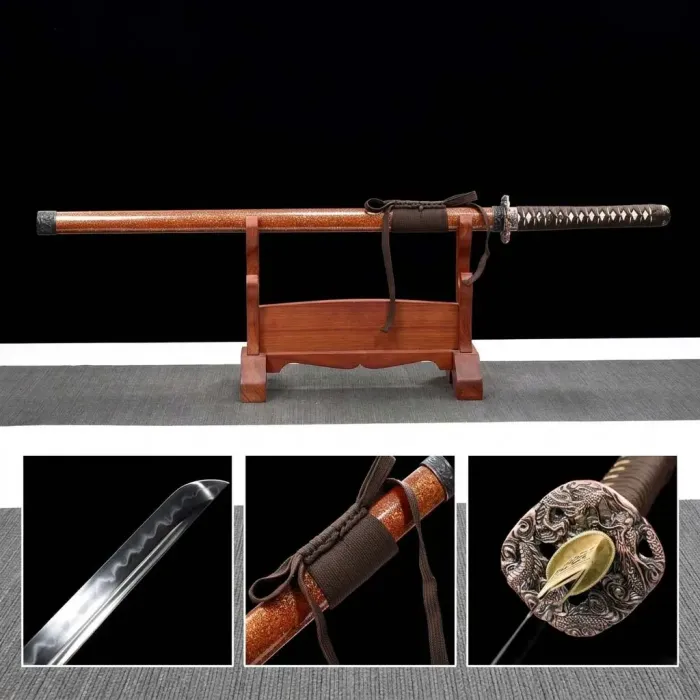
Although the glazed metallic edge is undeniably the core point of a katana, truly enhancing its beauty lies in the detailed customization of its accessories and grip . This operation allows craftsmen to demonstrate their inimitable design . Explore the vast possibilities: menuki - decorative embellishments that add visual charm ; the hamon shields – often artistically carved ; the tsuka heart itself, wrapped in time-honored ito lace ; and the fusa finial , which can be fashioned from various materials like ornaments or bone .
- Decide on motifs that match with you.
- Investigate with various components .
- Concentrate on excellence for a durable statement .
The Attraction of the Katana: Legacy, Artistry, and Steelwork
An eastern saber holds a exclusive allure, steeped in times of Nippon's history and culture . More than merely a apparatus of combat , it's a token of the fighter class ethos – a fusion of mastery and governance . Its unfolding spanned numerous generations, with early cutting instruments evolving into the sleek-lined curvature and deadly edge we know today. The workmanship involved is truly impressive , requiring ages of instruction to complete. The process involves a involved folding of refined metal , creating layers that fortify the instrument’s flexibility and severing ability. Diverse schools of fabricating came about , each with their particular secrets and processes for achieving the optimal symmetry and definition - a truly challenging pursuit.
- Preliminary Katana forms
- The function of the nihonto in fighter culture
- Heritage fabricating systems
Determining the Right Steel for Your Weapon Project: 1060 vs. T10
Choosing the correct steel is absolutely important for any katana project, and the decision between 1060 and T10 can be tricky. 1060 is a popular American steel, t10 steel katana offering a good balance of hardness and toughness, making it appropriately easy to condition. However, T10, a Far Eastern steel, habitually boasts heightened wear fortitude and can likely achieve a enhanced conclusive hardness, although it can be markedly troublesome to handle and requires precise heat refinement. Consider your qualification and expected benefits: for a first-timer, 1060 may be a easier starting point, while the master smith might admire the augmented features of T10.
- Simplicity of Working
- Longevity
- Decisive Rigidity
Accessing Excellence: Progressive Katana Alteration Approaches
Developing mastery in sword customization extends far beyond basic honing. Serious dedicated users are now studying advanced techniques to truly liberate a blade's hidden potential. This incorporates intricate work with the blade border, utilizing specialized compounds for differential annealing and carefully electing the shape of the crossguard to optimize balance and efficiency. Beyond purely functional adjustments, artisans are increasingly focused on generating unparalleled aesthetic grace, through complex embossing and layered polishes that truly transform a katana into a work of art.
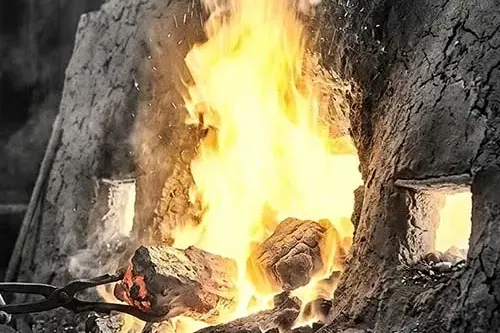
From Elemental Metal to Artistry: Forging a 1060 Blade
The journey embarks with typical 1060 substance, a resilient material far lacking the elegant katana it will develop into. Expert bladesmiths perform a complicated process of uniting and molding the primary steel, repeatedly raising it and impacting it to eliminate impurities and generate a stable grain structure. This demanding process, often stretching for weeks , builds the crucial solidity and give characteristic of a legitimate Japanese sword . Continued heat manipulations , including precise hardening and cooling , are mandatory to achieve the desired steadiness of sharpness, persistence and magnificence.- Doubling: Decreases impurities and generates grain structure.
- Forging: Models the steel into the initial blade form.
- Conditioning: Regulates the final hardness and flexibility.
The Ongoing Allure of the Katana: Detailed Survey of Metal and Enhancement
Every traditional katana endures a potent symbol signifying Japanese style , its draw far surpassing mere combat tools . Forged from unique steel and commonly featuring intricate ornaments , the approach of creation itself is a venerated art. Beyond the foundational craftsmanship, the ability to refine a katana - from the hamon to the hilt wrapping and collar - grants for a deeply individual representation for both devotees and handlers alike. This mixture of legacy steelwork and boundless personalization effectuates the katana's continued prestige across the sphere .